
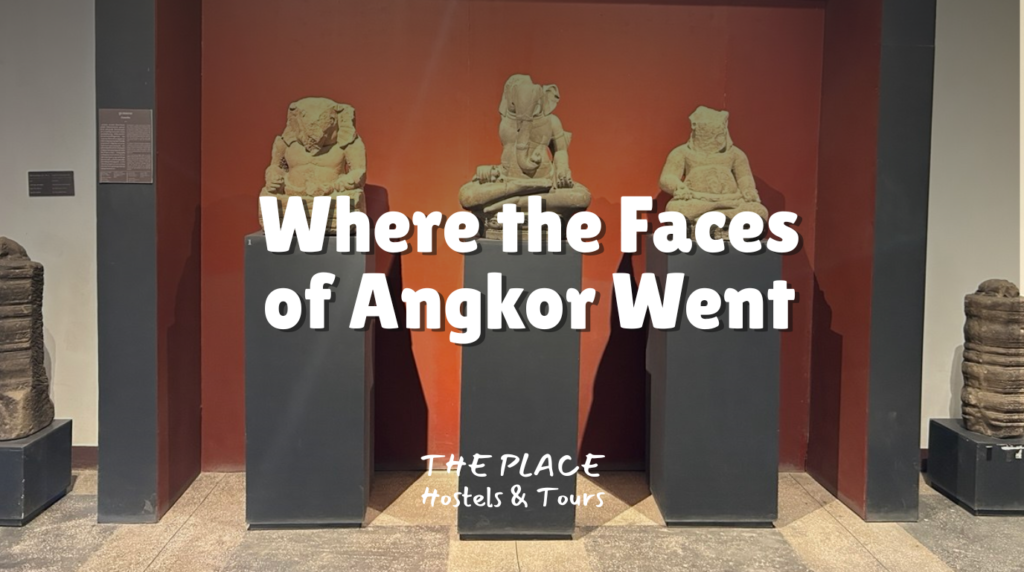
Inside the quiet halls of the National Museum in Phnom Penh, dozens of Khmer statues stand headless. Beautifully carved dancers, deities, and temple guardians, cut clean at the neck. This isn’t the work of time. It’s the work of people.
For decades, the heads of Khmer statues were the prime target for art traffickers. The reason is almost mundane: a carved stone head fits in a bag, travels easily, and sells for a high price on the black market, without the hassle of moving an entire statue weighing hundreds of kilos. Sites like Koh Ker and Banteay Chhmar, and even corners of Angkor itself, saw their stone guardians decapitated one by one, often sawed or chiseled off right at the temple.
Chaos as opportunity
The looting intensified during the country’s darkest years. British art dealer Douglas Latchford was indicted in 2019 for running a vast antiquities trafficking network out of Southeast Asia, (Fox News) (Fox News) exploiting decades of civil war and instability to loot sacred sites left completely unguarded. Koh Ker in particular was extensively looted in the 1970s, with at least a dozen monumental sculptures smuggled out of the country. (Metropolitan Museum of Art) Ironically, even pieces already gathered in museums for safekeeping weren’t spared.
The ancestors come home
Over the past decade, the tide has turned. Major Western museums, under pressure from US federal investigations and closer scrutiny of provenance, have started returning these works. In 2015, the Cleveland Museum of Art returned a 10th-century statue of the monkey god Hanuman to Cambodia, after uncovering evidence it had likely been looted during the civil war. (NBC News) More recently, the Metropolitan Museum of Art in New York physically returned 14 sculptures to Cambodia in July 2024, (Artnews) including a remarkable 10th-century statue of the goddess Uma from the ancient royal capital of Koh Ker, (Artnews) whose foot had already been recovered from its original site.
For Cambodians, these returns mean far more than simple restitution. At the welcoming ceremony in Phnom Penh, Buddhist monks chanted blessings and scattered flowers over the repatriated artifacts, in a celebration likened to welcoming home the souls of ancestors.
What you’ll see today
At the National Museum in Phnom Penh and at Angkor, these headless bodies aren’t hidden away. They’re displayed as they are, sometimes with a simple placard explaining their history. It’s Cambodia’s way of owning and telling this wound, rather than concealing it. As you wander the galleries, take a moment to stop in front of these incomplete statues. They tell a story every bit as important as the temples themselves.
Image, Battambang museum