
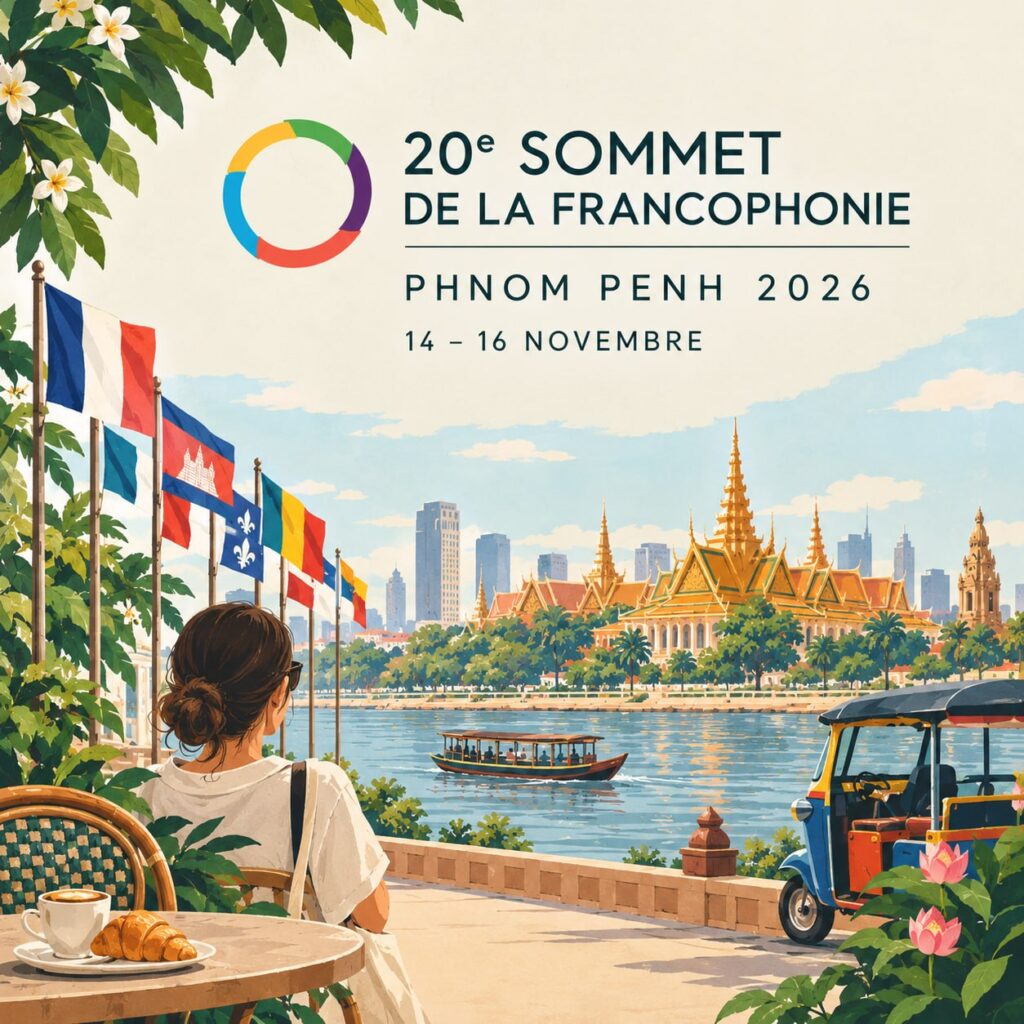
In mid-November, Phnom Penh will welcome an international gathering that many travelers may never have heard of: the Francophonie Summit. But what exactly is it, why is Cambodia hosting it, and what does it mean if you happen to be visiting the capital?
What Is the Francophonie Summit?
Every two years, leaders from across the French-speaking world come together for the Francophonie Summit, a major diplomatic gathering organized by the International Organisation of La Francophonie (OIF).
Founded in 1970, the OIF brings together 90 states and governments through a shared connection to the French language, alongside cooperation in areas such as culture, education, peace and sustainable development.
One of the organization’s founding figures was Cambodia’s own King Norodom Sihanouk, making the country’s connection to the Francophonie particularly meaningful.
The 20th Francophonie Summit is scheduled for November 15–16, 2026, with a ministerial conference on November 14. Under the theme of reinvesting in peace for shared prosperity and lasting stability, the gathering will bring international leaders together to discuss the future of the Francophone community and its role in a changing world.
For most travelers, it might sound like a distant political affair. But the story behind it reveals an interesting side of Cambodia’s history.
Why Is Cambodia Hosting It?
Cambodia’s relationship with the French-speaking world goes back more than a century.
From 1863 to 1953, Cambodia was under French protection. During this period, French influence shaped parts of the country’s administration, education and urban architecture. Although French is now spoken by only a minority of Cambodians, traces of this history remain visible throughout Phnom Penh.
Look closely, and you may notice old colonial-era façades, traditional bakeries selling baguettes and pastries, and familiar French words woven into everyday Cambodian vocabulary.
Cambodia joined the Francophonie as an observer in 1991 before becoming a full member in 1993. Hosting the summit marks another important chapter in this relationship. It is the first time Cambodia has hosted the gathering and the first time it has returned to Southeast Asia since the 1997 summit in Hanoi, Vietnam.
The summit was originally planned for Siem Reap before being moved to Phnom Penh, bringing the international spotlight to Cambodia’s capital.
What Does It Mean for Travelers Visiting Phnom Penh?
The Francophonie Summit is primarily a diplomatic event rather than a public festival. You won’t necessarily find celebrations happening on every street, but you may notice some changes around the city.
Book your accommodation early. With international delegations and visitors arriving for the summit, demand for accommodation may increase. If Phnom Penh is part of your November itinerary, securing your stay in advance is a sensible move.
Allow extra time for getting around. Traffic may become heavier, particularly near official venues and important roads. Security measures could also affect access to certain areas. Leave extra time for tuk-tuk rides, airport transfers and other journeys.
Keep an eye on your travel plans. If you’re catching a flight, taking a bus or planning a day trip, check for updates before departure. Possible traffic restrictions and changes to access routes are worth keeping in mind.
Check prices and availability. Higher demand can affect accommodation and transport availability, so confirm prices and bookings rather than leaving everything until the last minute.
For backpackers travelling through Cambodia, a little planning can make the difference between a smooth stop in the capital and an unexpectedly complicated travel day.
More Than Diplomatic Meetings: What Can Visitors Explore?
Although the summit itself is focused on international cooperation, related events are expected to bring Francophone culture, innovation and business into the public eye.
The Village de la Francophonie is intended to offer a space for citizens to discover Francophone cultures. FrancoTech will focus on innovation and technology, while the 6th Meeting of Francophone Entrepreneurs will bring business communities together.
Some activities may be open to the public, although access and registration requirements can vary. Check the official event website at francophonie2026.gov.kh for the latest programme and visitor information before making plans.
For travelers interested in culture, languages and international connections, these events may offer a different way to experience Phnom Penh beyond its usual sightseeing itinerary.
Discover Phnom Penh’s French-Colonial Side
You don’t need to attend an official summit event to appreciate the historical connection between Cambodia and France. Some of the city’s most interesting details are waiting to be discovered on an ordinary afternoon.
Start with a walk through central Phnom Penh, where older buildings and architectural details tell stories of the city’s past. Visit the National Museum of Cambodia to learn more about the country’s artistic and cultural heritage, then continue towards the riverfront as the afternoon light settles over the city.
And, of course, leave time for a coffee and a croissant at a local café.
The experience isn’t about looking at Cambodia through a French lens. It’s about understanding how different periods of history have contributed to the city Phnom Penh is today: a place where Khmer traditions, international influences and modern urban life exist side by side.
A Different Side of Cambodia’s Capital
Cambodia has long been a crossroads of cultures, languages and histories. The Francophonie Summit offers an opportunity to reflect on one part of that story while Phnom Penh welcomes visitors and leaders from around the world.
For travelers, the summit may mean a little more planning and a few changes to the daily routine. But it can also be a reminder that there’s more to discover in this city than its famous landmarks, lively nightlife and riverside sunsets.
Visiting Phnom Penh in November? Plan ahead, stay curious and take the opportunity to explore the many layers of Cambodia’s capital. Sometimes, the most memorable part of a journey is discovering a story you didn’t know was there.