
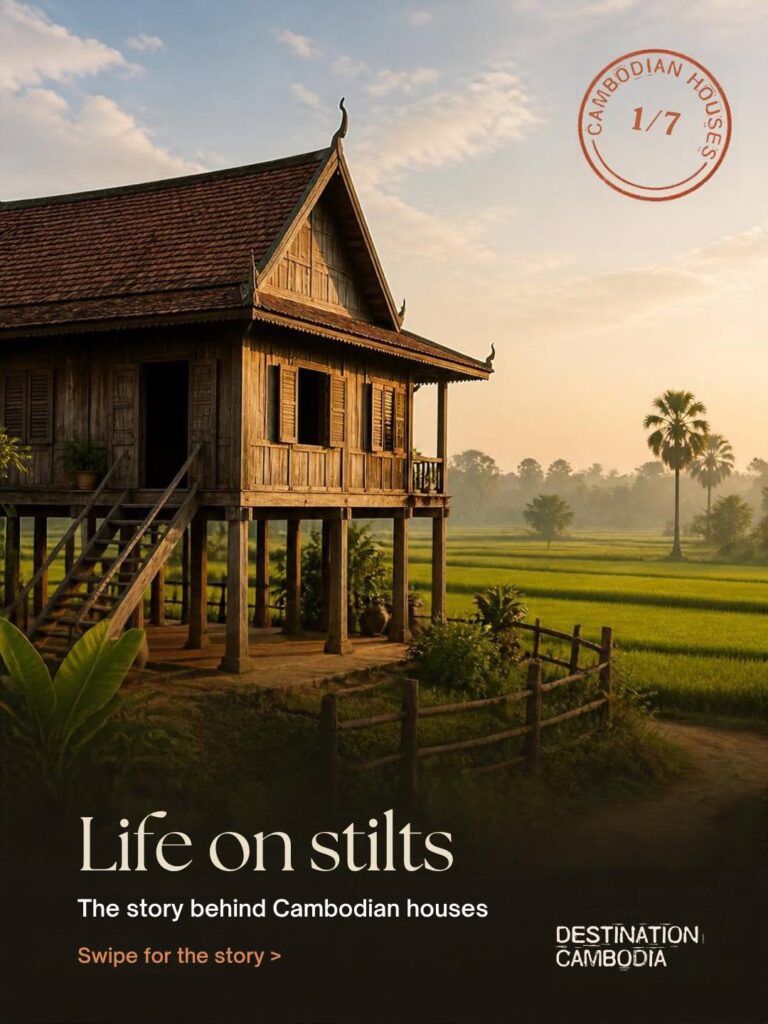
Discover the traditional Khmer stilt house and the clever ways Cambodian architecture has adapted to heat, rain, and changing water levels.
Drive an hour beyond a Cambodian town, and you may spot a familiar sight: wooden houses raised high above the ground, steep roofs sheltering the rooms below, and hammocks swaying gently in the shade.
These houses are more than a charming part of the Cambodian countryside. They tell a story of generations adapting to the tropical climate, living alongside water, and making the most of the space around them.
From traditional wooden homes to floating villages and modernist landmarks, Cambodia’s architecture offers a fascinating glimpse into the country’s history and everyday life.
1. The Traditional Khmer Stilt House: Built for the Climate
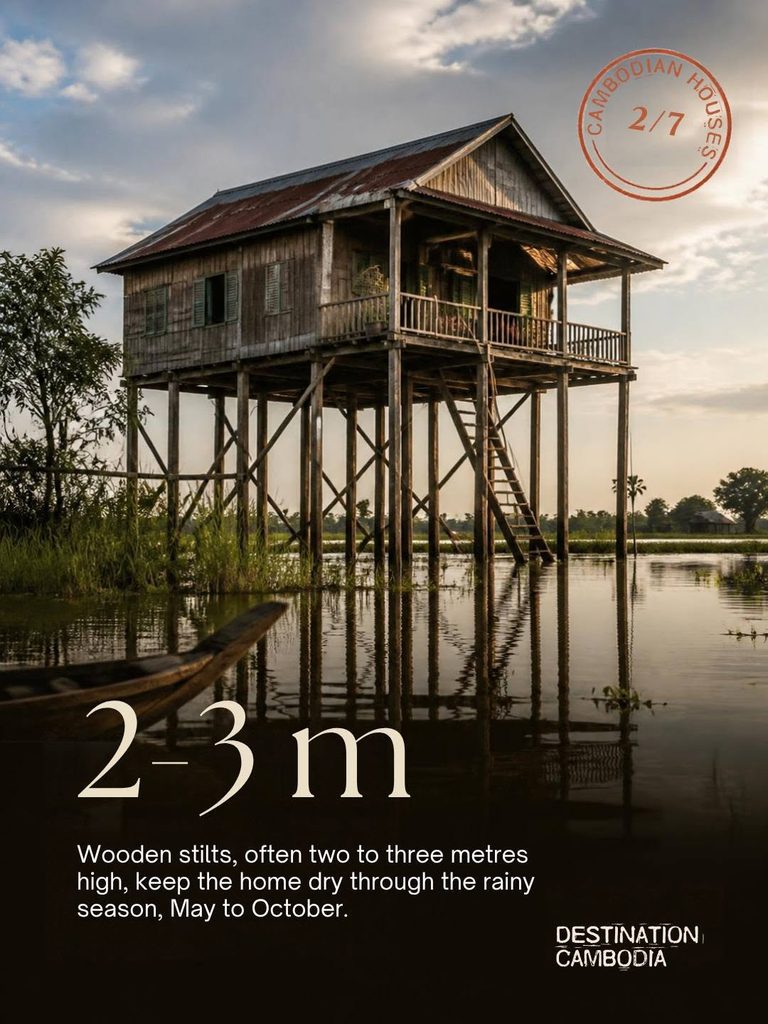
The traditional Khmer house, known as phteah, is often built on wooden stilts, sometimes raising the living space two to three metres above the ground.
The design serves several practical purposes. During the rainy season, typically from May to October, water can spread across rice fields and riverbanks. Raising the house helps protect the living space from flooding, while allowing air to circulate beneath the floor and keeping the interior cooler.
The space underneath the house is just as important as the rooms above.
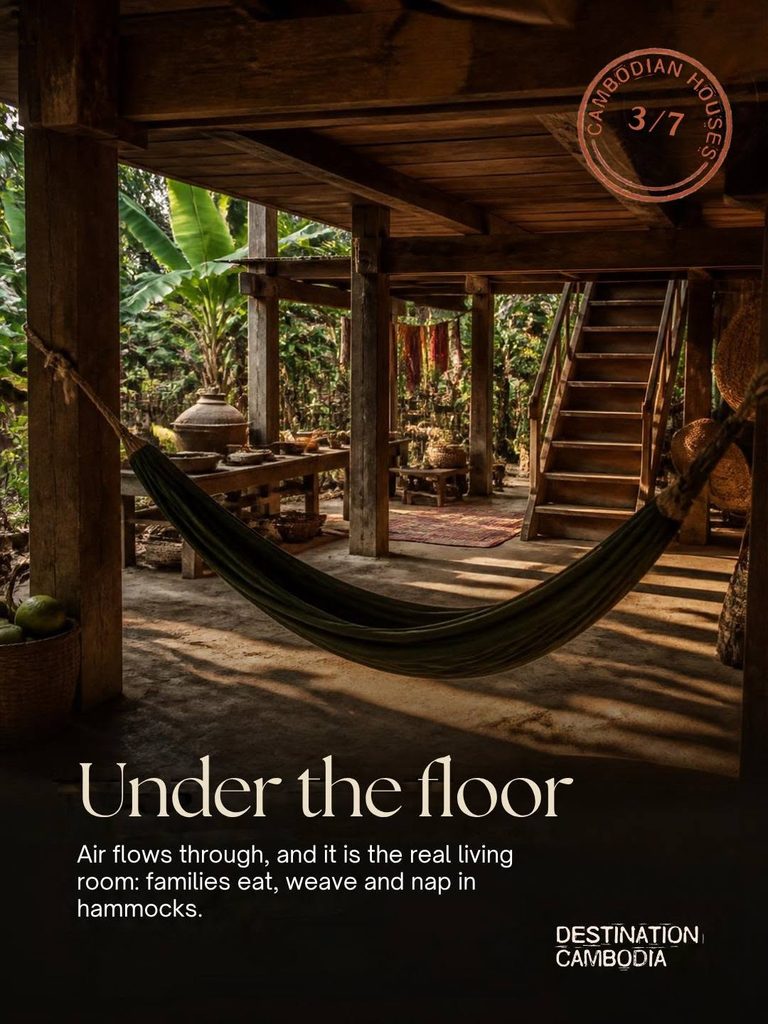
This shaded area often becomes an extension of the family’s living space. People gather to eat, weave, repair everyday items, park motorbikes, or rest in hammocks during the hottest hours of the day.
Traditional roofs were often made from palm thatch, although tiles and metal sheets are now common. Steep rooflines help rainwater run off, while wide eaves provide shade from the tropical sun.
Even small architectural details can reflect local traditions. In some communities, the number of steps leading into a house follows customary beliefs, with odd numbers often preferred.
A Khmer stilt house is a beautiful example of how practical design and cultural traditions come together.
2. Life on the Water: Cambodia’s Floating Villages
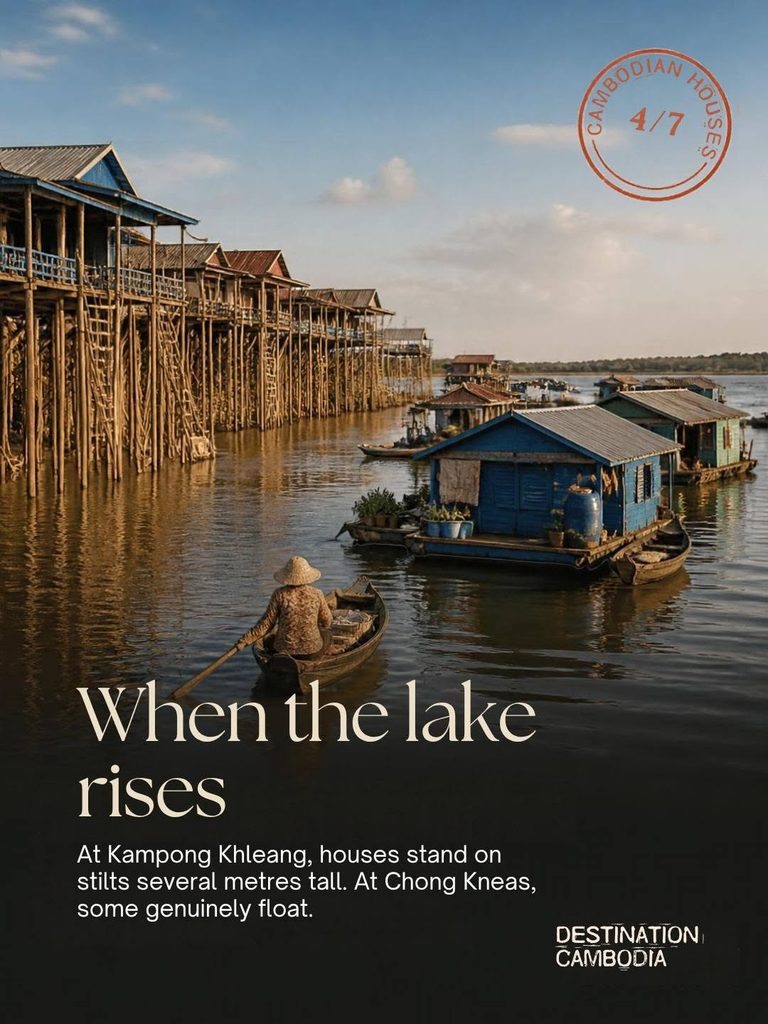
Around Tonlé Sap, Southeast Asia’s largest freshwater lake, the relationship between water and architecture becomes even more remarkable.
The lake has a unique seasonal rhythm. During the rainy season, rising Mekong River levels reverse the flow of the Tonlé Sap River, sending water into the lake and dramatically expanding its surface area. As water levels fall later in the year, the landscape changes again.
Communities have adapted to these changing conditions in different ways.
At Kampong Khleang, some houses stand on exceptionally tall stilts, keeping living spaces above the water during the wet season. Around Chong Kneas near Siem Reap and in parts of Kampong Chhnang, floating homes move with the changing water levels.
The result is a landscape that transforms throughout the year. Places that look like houses beside a riverbank in one season may appear surrounded by water in another.
Visiting these communities offers an opportunity to understand how local people have adapted their homes, livelihoods, and daily routines to life around the lake.
Travel tip: Consider visiting with a responsible local guide who can explain the community’s way of life. Be respectful when taking photographs, and ask permission before photographing residents or their homes.
3. From Shophouses to Colonial Villas: Architecture in Cambodia’s Towns
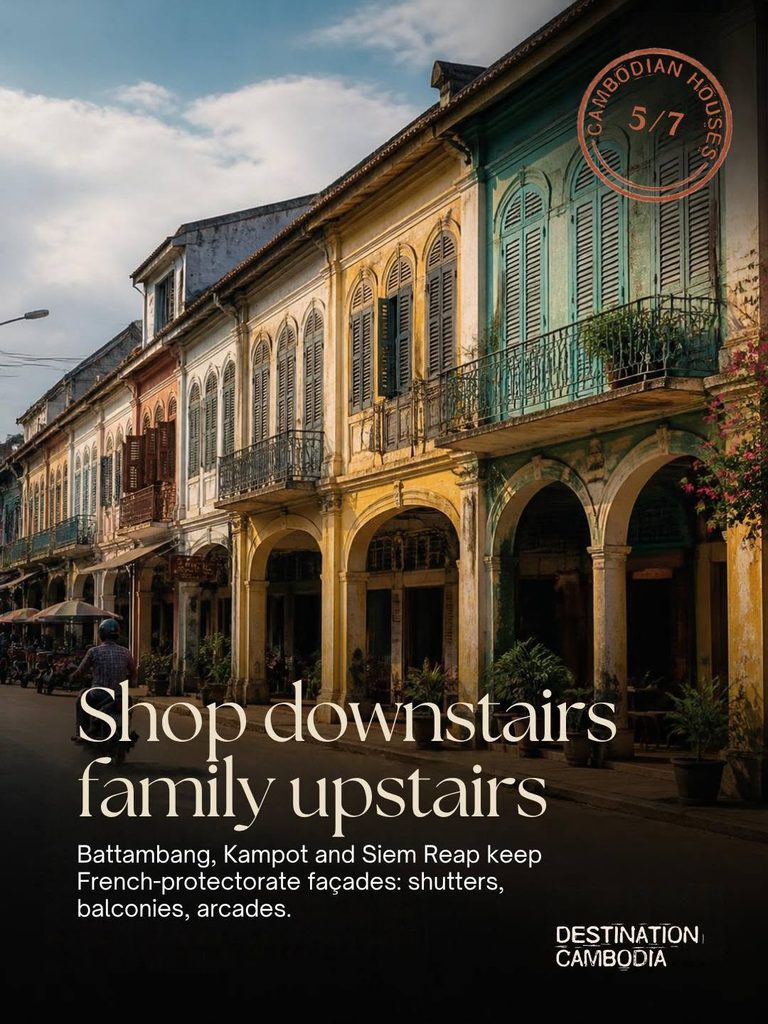
Away from the countryside, Cambodia’s towns reveal a different architectural story.
One of the most recognisable building types is the shophouse: a narrow, multi-storey building with a commercial space on the ground floor and living areas above. Influenced by Chinese merchant traditions and wider Southeast Asian urban development, shophouses remain an important part of everyday life.
Walk through a traditional commercial street, and you may see shopkeepers selling groceries downstairs while families live just above them. This combination of business and home reflects the close relationship between work, family, and community.
Cambodia’s towns also preserve buildings from the French protectorate period, particularly in places such as Battambang, Kampot, and Kep.
Look for decorative façades, wooden shutters, balconies, arched openings, and covered walkways. Some historic buildings have been restored as cafés, galleries, boutique hotels, and guesthouses. Others remain part of ordinary neighbourhood life, showing how the past continues to exist alongside the present.
For travellers who enjoy exploring on foot, these streets offer a different perspective on Cambodia beyond its temples and famous landmarks.
4. Phnom Penh’s New Khmer Architecture
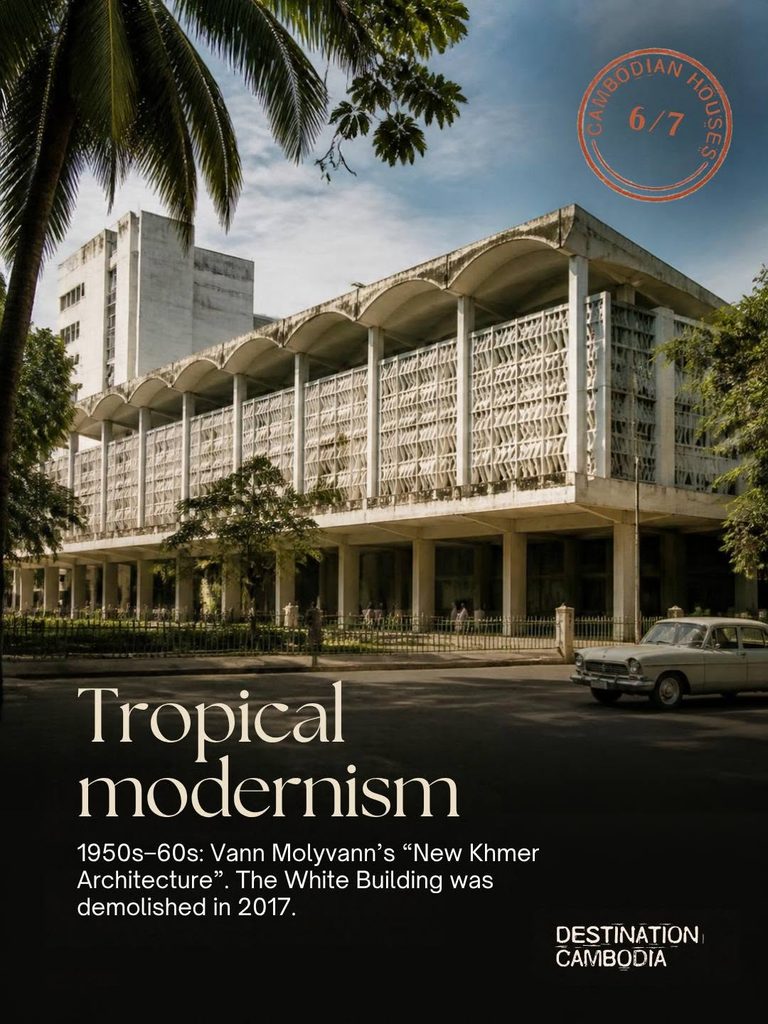
Cambodia’s architectural story did not stop with traditional wooden houses or colonial buildings.
During the 1950s and 1960s, following independence, a distinctive architectural movement emerged: New Khmer Architecture. Architects combined modern construction techniques with responses to Cambodia’s tropical climate and elements inspired by Khmer culture.
One of its leading figures was Vann Molyvann, whose work helped shape the visual identity of modern Phnom Penh.
Two well-known landmarks illustrate this period:
- Independence Monument: Completed in 1958, this striking structure draws inspiration from traditional Khmer forms and commemorates Cambodia’s independence from France.
- Olympic Stadium: Designed by Vann Molyvann and inaugurated in 1964, the complex demonstrates an ambitious approach to concrete structures, open space, natural airflow, and tropical design.
Another important building from the period was the White Building, a modernist residential complex that became a significant part of Phnom Penh’s urban history. It was demolished in 2017, highlighting the challenges of preserving architectural heritage as the city develops.
Today, New Khmer Architecture remains an important part of Cambodia’s cultural identity. For visitors interested in design and history, exploring these buildings reveals another side of the country’s creativity and ambition.
5. Cambodian Houses Today: Tradition Meets Change
Across Cambodia, construction materials and housing styles continue to evolve. Concrete, brick, and metal roofing are increasingly common, while traditional wooden houses are becoming less visible in some areas.
Economic development, changing lifestyles, and the need for modern facilities all influence how people build their homes.
Some older wooden houses are carefully maintained, renovated, or dismantled and rebuilt elsewhere. Others have been adapted into guesthouses and small businesses, giving travellers the chance to experience a different style of accommodation.
But preserving traditional architecture is about more than keeping old buildings standing. It also means recognising the knowledge behind their design: how to manage heat, work with seasonal water, create shaded spaces, and bring families together.
Whether you encounter a stilt house in the countryside, a shophouse in a busy market street, or a modernist landmark in Phnom Penh, each building offers a glimpse into Cambodia’s changing way of life.
6. How to Explore Cambodia’s Architecture
You do not need to be an architect to appreciate Cambodian buildings. Sometimes, the best way to understand them is simply to slow down and look around.
Here are a few ways to get started:
- Take a countryside ride. Explore rural roads by bicycle or scooter, where traditional wooden houses and everyday village life can be easier to observe.
- Visit Tonlé Sap with a local guide. Learn how communities adapt to changing water levels and seasonal conditions.
- Explore Battambang and Kampot on foot. Look for historic shophouses, colonial façades, and buildings that have been given a new purpose.
- Discover Phnom Penh’s modernist landmarks. Visit the Independence Monument and Olympic Stadium to see how architecture changed after independence.
- Respect local homes and communities. Ask permission before taking photographs of people or private property, and remove your shoes before entering a home when invited.
Most importantly, remember that these buildings are not simply attractions. They are homes, workplaces, and gathering places for the people who live there.
A Different Way to Discover Cambodia
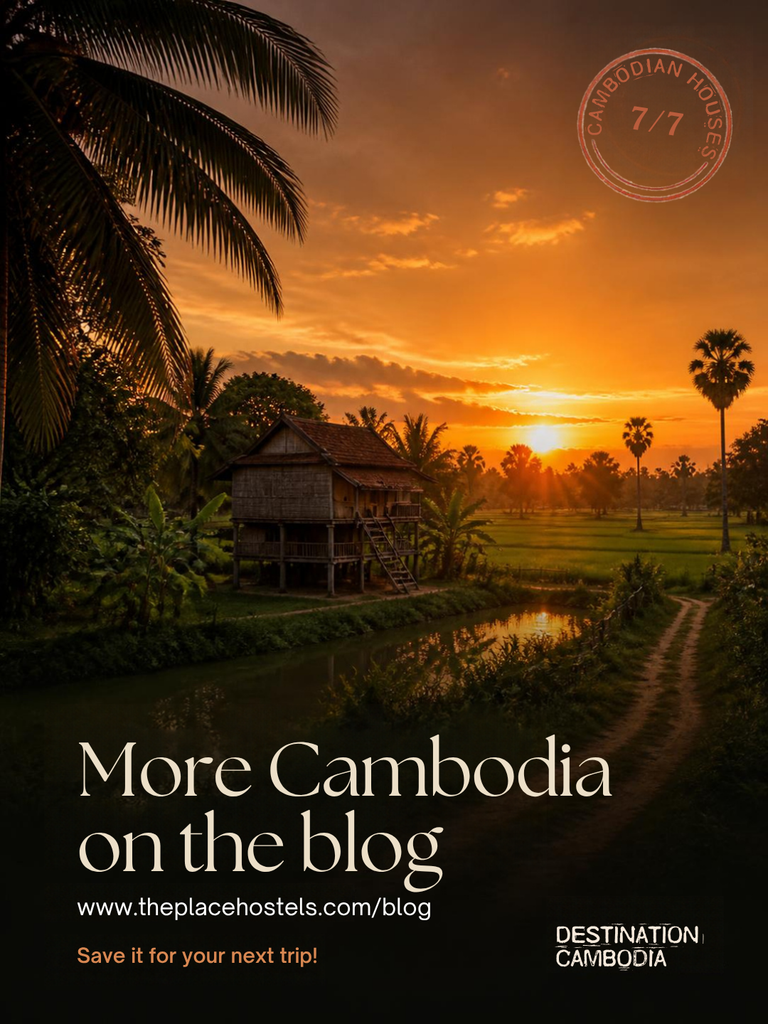
A Cambodian house tells a story of water, heat, family, culture, and time.
The raised floor of a traditional wooden home, the busy ground floor of a shophouse, and the sweeping concrete forms of New Khmer Architecture may seem worlds apart. Yet each reflects a different response to the needs and circumstances of its time.
So, on your next journey through Cambodia, look beyond the temples and monuments. Notice the roofs, the balconies, the shaded spaces beneath the floors, and the ways people use the buildings around them.
Sometimes, the most interesting stories are found not inside a famous landmark, but in the homes and streets that make up everyday Cambodian life.