
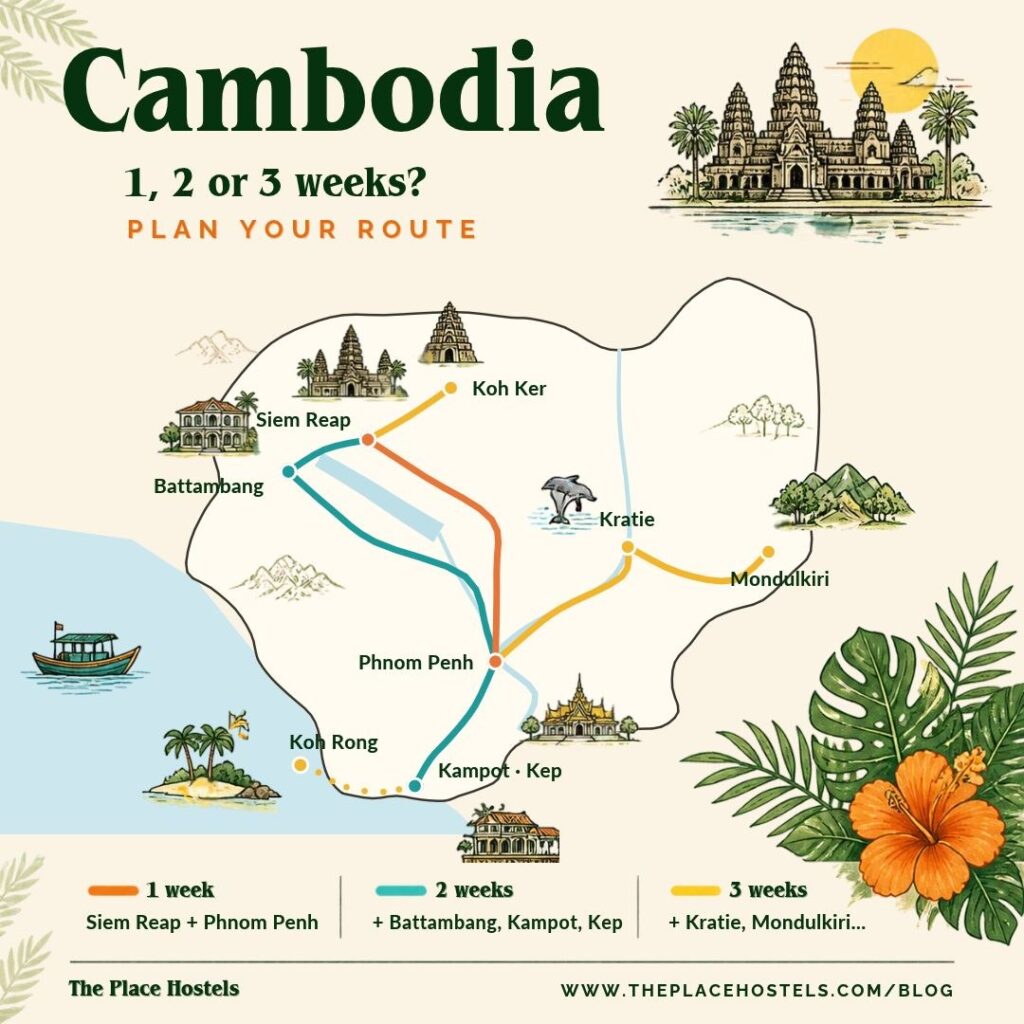
Wondering how long to spend in Cambodia? Whether you have one week or three, here are three itinerary ideas to help you explore ancient temples, lively cities, local culture, and beautiful nature without rushing.
“How long do I need in Cambodia?” It’s one of the most common questions travellers ask when planning their trip.
The good news is that Cambodia has something for every travel style. You can spend a week discovering its famous temples and capital city, two weeks exploring charming smaller towns, or three weeks travelling beyond the usual tourist route.
Here are three ways to plan your Cambodia itinerary, depending on how much time you have.
1 Week in Cambodia: The Essentials
With seven days, it’s best to choose two main destinations rather than trying to see the entire country. This gives you enough time to explore the highlights without spending every other day on a bus.
Days 1–4: Siem Reap
Siem Reap is the perfect starting point for a first trip to Cambodia. The city is best known for the Angkor Archaeological Park, home to some of the most remarkable temples in Southeast Asia.
Start with Angkor Wat, built in the early 12th century under King Suryavarman II. Continue to Bayon Temple, famous for its enormous carved stone faces, and explore Ta Prohm, where tree roots twist around ancient stone structures.
If you have extra time, visit Banteay Srei, a smaller temple renowned for its intricate pink sandstone carvings. Back in town, leave some time to explore local markets, discover cafés, and enjoy Khmer food.
Travel tip: Give yourself at least two days to explore the Angkor temples. Watching the sunrise at Angkor Wat is popular, but the quieter temple corners can be just as memorable.
Days 5–7: Phnom Penh
Cambodia’s capital offers a different perspective on the country. Phnom Penh combines busy streets, riverside cafés, traditional markets, and important historical sites.
Visit the Royal Palace and National Museum of Cambodia to learn about Khmer art and history. To understand the country’s more recent past, consider visiting Tuol Sleng Genocide Museum and the Choeung Ek Genocidal Center, which preserve the memory of the Khmer Rouge period from 1975 to 1979.
In the evening, take a walk along the riverside, try local street food, or find a relaxed spot for a drink.
Getting between the two cities: The road journey between Siem Reap and Phnom Penh generally takes around six hours, depending on traffic and transport options.
2 Weeks in Cambodia: Culture, Nature and Local Life
With two weeks, you can explore Cambodia at a more comfortable pace. Along with the famous destinations, you’ll have time for smaller cities, countryside experiences, and a few slower days.
Days 1–4: Siem Reap
Follow the four-day itinerary above, including Angkor Wat, Bayon, Ta Prohm, and the town’s markets and cafés.
If you want to explore beyond the main temple circuit, consider Beng Mealea, an atmospheric temple complex surrounded by jungle, roughly 60 kilometres from Siem Reap.
Days 5–7: Battambang
Battambang is one of Cambodia’s most charming cities, known for its colonial architecture, creative community, local food, and slower pace of life.
Spend time walking around the old town, stopping at independent cafés, and discovering the local arts scene. Visit Phare Ponleu Selpak, a Cambodian arts and circus school that supports young artists and creative education.
You can also experience the famous bamboo train and head to Phnom Sampeau in the late afternoon to watch thousands of bats emerge from their cave at sunset.
Battambang is a great place to slow down and experience a side of Cambodia that many travellers miss.
Days 8–10: Phnom Penh
Spend three days exploring the capital’s historical landmarks, markets, and neighbourhoods.
Beyond the Royal Palace and National Museum, visit local markets, discover the cafés around BKK1 and Bassac Lane, or spend an afternoon enjoying the city’s food scene.
If you enjoy meeting people while travelling, Phnom Penh also offers plenty of opportunities to connect with locals and other travellers through food tours, creative events, and relaxed social spaces.
Days 11–14: Kampot and Kep
Finish your two-week trip in southern Cambodia, where life moves at a slower pace.
In Kampot, spend time by the river, cycle through the countryside, visit pepper plantations, or go kayaking through peaceful waterways.
Then continue to Kep, a small coastal town famous for its seafood, especially fresh crab cooked with Kampot pepper. Visit the crab market, enjoy the sea views, and take a break from busy city life.
These final days are perfect for relaxing before heading home.
3 Weeks in Cambodia: Explore Beyond the Usual Route
If you have three weeks, you can follow the two-week itinerary and add destinations that offer a different experience of Cambodia.
You don’t need to visit all of them. Choose one or two based on whether you prefer wildlife, mountains, remote temples, or island life.
Kratie: Discover the Mekong River
Kratie is a peaceful riverside town known for opportunities to spot endangered Irrawaddy dolphins in the Mekong River.
You can also visit Koh Trong, an island across from town, and explore its rural landscapes by bicycle. It’s a wonderful destination for travellers who enjoy quiet places and local life.
Mondulkiri: Hills, Waterfalls and Forests
For a greener side of Cambodia, head to Mondulkiri in the country’s east.
The region is known for rolling hills, waterfalls, forest landscapes, and Indigenous Bunong culture. You can visit ethical elephant sanctuaries that prioritise animal welfare and responsible observation.
Allow extra travel time, as reaching Mondulkiri can take several hours from Phnom Penh.
Koh Rong or Koh Rong Sanloem: End Your Trip by the Sea
If your ideal holiday includes white-sand beaches, clear water, and evenings by the sea, consider spending your final days on Koh Rong or Koh Rong Sanloem.
Depending on the island and area you choose, you can swim, snorkel, relax in a hammock, or explore quieter stretches of coastline.
Koh Ker: A Quieter Ancient Temple Experience
For another temple destination, consider Koh Ker, an ancient Khmer capital that flourished in the 10th century.
Located north-east of Siem Reap, the archaeological site features forest surroundings, ancient temples, and the distinctive stepped pyramid of Prasat Thom. It offers a different atmosphere from the more visited Angkor temples.
Practical Tips for Planning Your Cambodia Itinerary
1. Choose the right season
Cambodia’s dry season generally runs from November to April, while the rainy season usually falls between May and October.
November to February is often a comfortable time to explore, although popular destinations can be busy. The rainy season brings greener landscapes and can mean fewer visitors, but heavy showers may affect road journeys and outdoor activities.
2. Allow enough time for travel
Distances can look short on a map, but journeys between destinations may take several hours. Check transport schedules and leave some flexibility, especially when connecting buses with flights or boat departures.
3. Spend more time in fewer places
It’s tempting to visit every destination, but moving every day can become exhausting.
Staying two or three nights in one place allows you to discover local cafés, wander through neighbourhoods, meet people, and experience daily life beyond the main attractions.
4. Leave room for spontaneous plans
You don’t need to plan every hour. An extra afternoon might become your favourite memory, whether it’s finding a small local restaurant, joining a cooking class, or spending an evening chatting with fellow travellers.
5. Choose destinations that match your travel style
If you love history, prioritise Siem Reap and the ancient temples. If you prefer creative communities and local culture, add Battambang. For nature and relaxation, consider Kampot, Mondulkiri, or the islands.
The best itinerary is not necessarily the one with the most stops. It’s the one that gives you time to enjoy the places you visit.
So, How Long Should You Spend in Cambodia?
One week is enough to discover Cambodia’s main highlights. Two weeks lets you experience a wider mix of cities, countryside, and coastal destinations. Three weeks gives you the freedom to explore more remote places and travel at a slower pace.
Whatever your schedule, Cambodia is a country best experienced with a little curiosity and some room for the unexpected.
And if you’re looking for a place to stay along the way, The Place Hostels welcomes travellers in Phnom Penh and Battambang, with comfortable accommodation and opportunities to connect with fellow travellers while discovering the local area.
You don’t have to see everything in one trip. Leave a little for next time.