
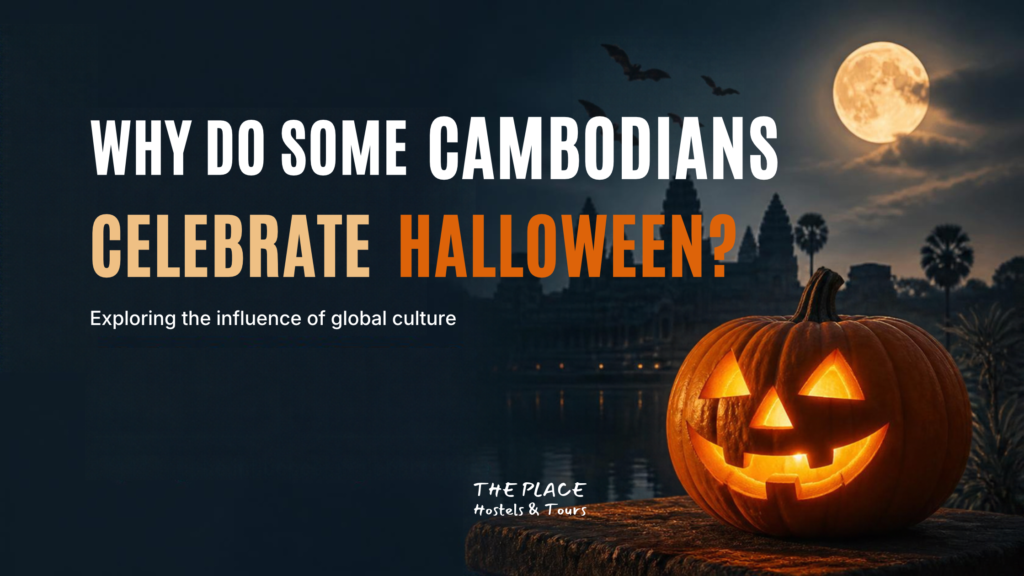
Every October, Halloween decorations begin to appear in cafés, restaurants, schools, and entertainment venues around Cambodia. People dress up in costumes, paint their faces, decorate spaces with pumpkins and spider webs, and gather for themed parties.
But Halloween is not a traditional Cambodian festival. So why are more Cambodians taking part in this celebration from another part of the world?
A Celebration That Travels Across Cultures
Halloween has its historical roots outside Cambodia, but globalization has made it easier for traditions to travel across borders. Through movies, social media, international schools, tourism, and contact with foreign communities, Cambodians have become more familiar with Halloween and the ways people celebrate it around the world.
For younger generations especially, social media platforms such as TikTok and Instagram offer endless inspiration for costumes, makeup, decorations, and creative Halloween ideas. What once seemed like a foreign tradition can become an exciting opportunity to try something new.
More Than Just Ghosts and Costumes
For many people, Halloween is less about its historical or religious origins and more about having fun.
It is a chance to dress differently, experiment with creative makeup, spend time with friends, and enjoy a themed party. Schools can organise costume competitions, while cafés, restaurants, and bars can transform their spaces into spooky settings for the occasion.
In this sense, Halloween becomes a social celebration rather than a religious observance. People can enjoy the atmosphere and participate in the activities without necessarily believing in or following the traditions associated with its origins.
Discovering Another Culture
Celebrating Halloween can also be a way for Cambodians to experience a different culture. Just as people around the world are curious about Cambodian festivals, food, and traditions, some Cambodians enjoy exploring celebrations that are popular elsewhere.
Participating in Halloween does not mean giving up local customs. Instead, it reflects how people can enjoy different cultural experiences while maintaining their own identities.
Halloween and Cambodia’s Own Traditions
Cambodia already has meaningful traditions connected with remembering the dead, particularly Pchum Ben. During this important Buddhist observance, families visit pagodas, make food offerings, and honour deceased relatives.
Although both Halloween and Pchum Ben can bring up ideas about spirits and the afterlife, their histories, beliefs, and purposes are different. Pchum Ben is deeply rooted in Cambodian Buddhist practice and family remembrance, while Halloween has evolved into a largely social and seasonal celebration in many places.
The similarities may encourage us to ask interesting questions about how different cultures understand life, death, and the unseen world. However, they should not be mistaken for evidence that the two festivals share the same origins.
A World Where Cultures Meet
Perhaps the reason some Cambodians celebrate Halloween is not complicated at all. It offers a chance to have fun, be creative, spend time with others, and experience something from another culture.
In a world where cultures increasingly meet and influence one another, traditions can travel, evolve, and take on new meanings for different communities.
And sometimes, enjoying a little Halloween magic is simply about making memories with the people around us.
Happy Halloween! 🎃